
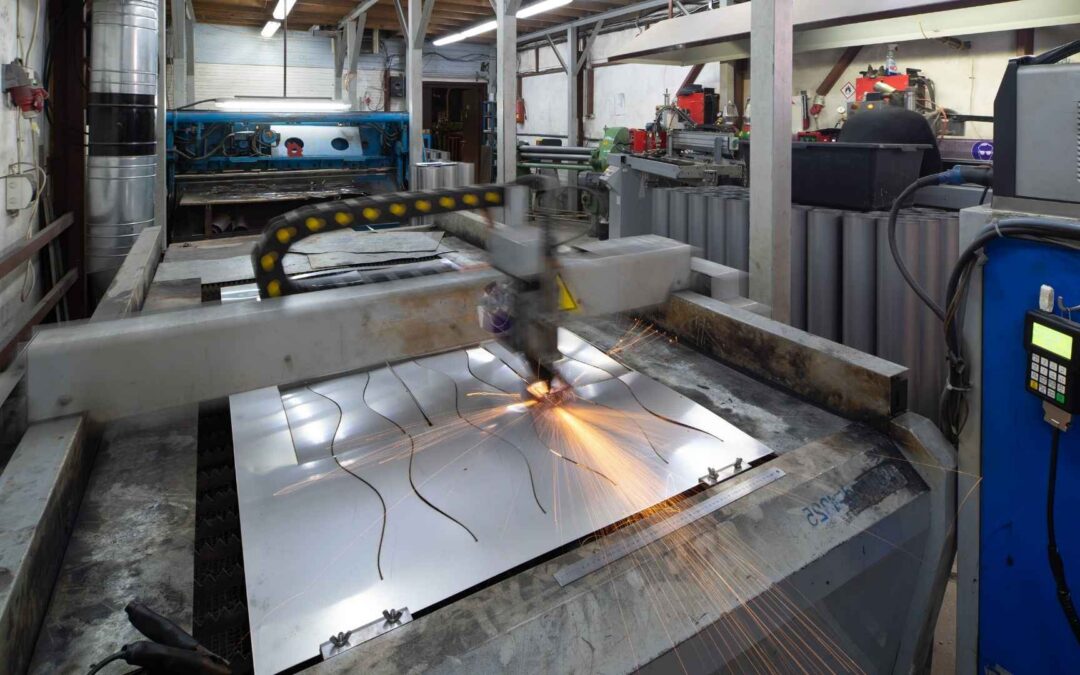
Industrial equipment does not fail all at once. It degrades piece by piece, component by component, until the whole system underperforms or shuts down entirely. For facility managers and operations teams, the question is rarely whether a part will wear out, but how quickly, and what replaces it when it does. That is where custom-fabricated parts change the equation in a meaningful way.
The industrial equipment market is flooded with standardized components built to serve the widest possible range of applications. That kind of broad compatibility sounds convenient, but in practice, it often means the part is a close fit rather than a perfect one. And in high-demand industrial environments, close is rarely good enough. Custom-fabricated parts are engineered to match the exact specifications of the equipment and environment they are built for, which translates directly into better performance, longer service life, and fewer unplanned interruptions.
This article breaks down why custom-fabricated parts outperform their off-the-shelf counterparts, where the biggest gains show up in real industrial settings, and what it looks like to actually work with a steel fabricator on a custom component project.
The Problem With One-Size-Fits-All Components
Standardized parts exist for good reason. They reduce manufacturing costs, simplify inventory management, and make it easy to find a replacement in a hurry. For routine, low-stress applications, they work well enough. But industrial equipment rarely operates in routine, low-stress conditions.
Heavy manufacturing lines, processing facilities, mining operations, and agricultural machinery all put components under significant and highly specific stress. The combination of load, vibration, heat, chemical exposure, and operational frequency varies from one installation to the next, and standardized parts are not designed with any particular installation in mind. They are designed to meet the average, which means they may fall short in environments that push beyond it.
The result is a predictable cycle: a component wears faster than expected, performance drops, downtime increases, and the replacement part is identical to the one that just failed. Custom-fabricated parts break that cycle by addressing the actual conditions a component faces rather than the assumed average.
This is not a niche concern; unplanned downtime in manufacturing facilities costs industrial operators an estimated 50 billion dollars per year. A significant portion of that cost traces directly back to component failure, much of which can be mitigated through better part design and material selection.
Where Custom Fabricated Parts Make the Biggest Difference
Not every component on every machine needs to be custom-built. But for high-wear, high-load, or operationally critical parts, the performance gap between a standardized component and a purpose-built one is substantial. Several categories consistently show the biggest returns from custom fabrication.
Mounting brackets and support structures are a prime example. These components carry the weight and vibration of larger assemblies, and when they are not sized correctly for the actual load they bear, fatigue cracks develop faster than expected. Custom-fabricated parts in these roles are engineered to the precise load ratings and geometry of the installation, which can dramatically extend service intervals.
Wear plates and guards are another area where custom fabrication pays off quickly. In applications where abrasion is constant, a wear component built from the right steel grade and cut to the exact dimensions of the equipment it protects will outlast a generic alternative by a wide margin. The right material selection alone can double or triple service life in some cases.
Replacement parts for aging or obsolete equipment are perhaps the most compelling case for custom fabrication. When a machine is no longer supported by its original manufacturer and critical components are no longer available through normal supply channels, custom-fabricated parts are often the only viable alternative to scrapping equipment that still has years of productive life in it. That kind of capability is enormously valuable for operations running older but well-maintained machinery.
Material Selection and Why It Matters More Than Most People Realize
Steel is not a single material. It is a family of alloys, each with its own mechanical properties, and choosing the right one for a given application is one of the most consequential decisions in any fabrication project. The difference between the right steel grade and a close substitute can mean the difference between a component that lasts five years and one that lasts fifteen.
High-strength low-alloy steels are well suited to structural applications where tensile strength and weight savings both matter. Abrasion-resistant steels are the right choice for wear plates and cutting edges operating in harsh environments. Stainless grades offer corrosion resistance for food processing, chemical handling, and marine applications. A fabricator with deep material knowledge will match the alloy to the actual operating conditions rather than defaulting to whatever is most convenient to source.
Custom-fabricated parts also allow for targeted hardening and surface treatments that standardized parts rarely receive. Case hardening, nitriding, and specialized coatings can dramatically improve the surface performance of a component without changing its core properties, giving engineers far more control over how a part wears over time.
The Role of Welding Quality in Component Performance
A custom-fabricated part is only as good as the welds that hold it together. In industrial applications, where components face constant stress, thermal cycling, and mechanical shock, weld integrity is not a secondary consideration. It is central to whether a part performs as designed or fails prematurely.
Professional welders working on custom-fabricated parts for industrial use understand the process requirements for different material combinations and joint configurations. They know how to prepare weld surfaces correctly, how to select filler materials that match base metal properties, and how to apply the right heat input for the thickness and geometry involved. Each of those decisions directly affects the mechanical strength and fatigue life of the finished component.
Weld inspection and quality control are equally important. Visual inspection catches surface defects, but for critical structural components, non-destructive testing methods can identify subsurface discontinuities that would eventually lead to failure. Fabricators who take quality seriously build these verification steps into their standard process rather than treating them as optional extras.
When a weld is done right, it is often stronger than the base metal surrounding it. When it is done poorly, it becomes the weakest point in the entire assembly. In industrial equipment, the consequences of that kind of failure extend far beyond the cost of a single component, which is why working with a certified, experienced welding operation is not a place to economize.
How Custom Parts Reduce Long-Term Operating Costs
The upfront cost of custom-fabricated parts is higher than off-the-shelf alternatives, and that is a real consideration for any operation managing a capital budget. But focusing on unit cost without accounting for service life, replacement frequency, and downtime exposure gives a distorted picture of the actual financial impact.
A standard wear component that needs replacement every six months costs more over three years than a custom-fabricated part that lasts two years, even if the custom part costs three times as much at purchase. That math gets even more favorable when you factor in the labor cost of each replacement, the production loss during each shutdown, and the administrative burden of frequent procurement cycles.
Custom-fabricated parts also tend to reduce the frequency of secondary damage. When a component fails unexpectedly, it rarely fails cleanly. Bearing failures damage housings. Broken brackets damage the assemblies they support. Worn wear plates allow abrasion to reach structural surfaces that were not designed to handle it. Parts that last longer and fail more predictably protect the surrounding equipment as much as themselves.
Over the lifetime of a piece of industrial equipment, the cumulative value of fewer shutdowns, longer service intervals, and reduced secondary damage typically far exceeds the premium paid for custom fabrication. Operations that have made that shift in thinking consistently report lower total maintenance costs and better equipment availability.
What the Process of Getting Custom Parts Actually Looks Like
One reason some operations stick with standard parts even when custom parts would serve them better is unfamiliarity with how the fabrication process works. The reality is more straightforward than many people expect, particularly when working with a shop that has experience in industrial applications.
The process typically starts with a detailed assessment of the application: what loads the part will carry, what environment it will operate in, what the failure mode of the current component has been, and what dimensional constraints the installation imposes. A good fabricator will ask all of these questions and use the answers to inform both material selection and design.
From there, the fabricator produces drawings or models for review before any material is cut. This is the stage where adjustments are easiest and least expensive, so it is worth investing time here to confirm that every dimension and specification is correct. Once approved, fabrication proceeds, and the finished part goes through inspection before delivery.
For replacement parts on existing equipment, the fabricator will often want to examine the original component or work from accurate measurements taken on-site. That dimensional accuracy is what makes custom-fabricated parts a true drop-in solution rather than a part that requires modification to fit. The goal is always a component that installs cleanly, performs better, and causes no disruption to the surrounding assembly.
When to Consider Switching to Custom Fabricated Parts
Not every maintenance situation calls for custom fabrication, but several patterns are strong signals that standard parts are not serving an operation well. If the same component fails repeatedly on the same timeline, that is a clear sign the part is not matched to the demands of the application. If a piece of equipment is running on parts that are increasingly difficult to source, custom fabrication offers a path to supply chain independence.
Operations that are modifying standard parts after purchase to make them fit or function correctly are already paying for custom work without getting the full benefit of it. Going to a fabricator directly and having the part built to the required specification from the start will almost always yield a better result at a comparable or lower total cost.
Expansion or modification of existing equipment is another natural trigger. When a production line is upgraded, a machine is repurposed, or a facility layout changes, the original components often no longer fit the new configuration. Custom-fabricated parts make it possible to adapt existing equipment rather than replace it, which can represent significant capital savings.
Talk to Hill Steel Builders About Your Next Project
If your equipment is overdue for better-performing components, or if you are dealing with parts that are hard to source, wearing out too fast, or simply not built for the demands of your operation, Hill Steel Builders can help. With expertise in custom steel fabrication and professional welding, our team builds components designed around your specific application, not the average one. Contact Hill Steel Builders today to start the conversation about what custom-fabricated parts could do for your operation.
Recent Comments